

Settling in sessions
For children to flourish and make the most of the learning opportunities available to them, it is important that they feel safe, happy and secure in their new environment. We recognise that every child is different, and settling into preschool can take time. We therefore offer as many settling-in sessions as each child needs to help them become familiar with the setting, the staff and their new surroundings.
We will contact all parents at least one month before their child’s start date to arrange these sessions. They provide an opportunity for children to explore the preschool, build relationships with their key person and gradually develop confidence and independence.
Our aim is to help each child feel comfortable and secure enough to enjoy time in the setting without their parent or carer. We work closely with families throughout this process, taking an individual approach and recognising that some children may need more time and reassurance than others..

Welcoming newcomers

Child and parent stay and play for an hour with minimal contact with staff. The key person will ideally be in session and able to say a quick hello and have a little play. We do not want to overwhelm a child on their first visit which is why we step back a little. Please do not mistake it as a lack of interest, just our way of giving your child some ‘space’ on their first visit. One of the managers will chat with the parent to explain a bit about the preschool and to answer any questions you have, and then retreat a little and let you both explore and play. This first session can be a good indication as to how many more settling in sessions your child may need and we will discuss this with you at some point. Be aware that you know your child best and we will always follow your lead.

The second stage is when the key person will try to start to play more with the child and we encourage the parent to retreat a little. The parent doesn’t have to go far, just trying to be very boring stood on the side lines. The child needs to know this is where they come to play, not where mummy (any parent/carer) comes to play too.

The parent starts to move to the other side of the room, maybe to get a tissue. The parent needs to repeat this action many times until the child stops following the parent and is happy to know that they will return.

Once a child is happy to play with the other children/on their own/with their key person and happy for the parent to quickly pop out of view, then we attempt a longer separation. The parent must always tell the child they are about to leave (to go to the toilet/get a cup of tea/make a phone call) and tell them they will be back soon. It really helps here if the parent can keep a positive tone to their voice and not cuddle their child too much (we know this can be very hard as leaving your child can be very emotional for parents, particularly if the child appears unhappy).
Once the parent has said they are leaving, they must then (supervised) leave the main play room, even if the child cries, the parent is still encouraged to leave. If the child is very upset we suggest the parent counts to 30 then comes back into the room. The child needs to understand that when their parent says they will come back they do return. This is then repeated a few times, gradually increasing the amount of time the parent spends out of the room. The aim is that the child can be settled by their keyperson and are happy to play.

A child can start their session once a child is content with their parent saying bye and leaving them to play for an hour visit.
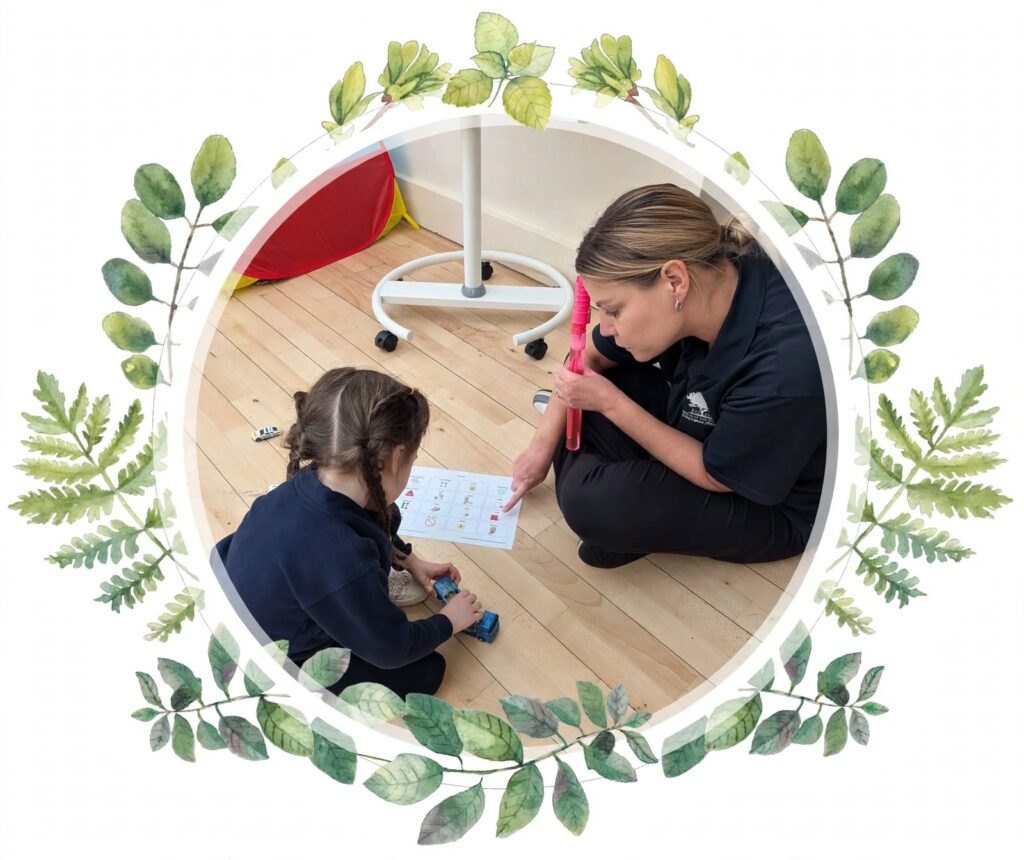
Settling in plan
Some children may find separating from their parent difficult, regardless of how many settling-in sessions they have attended. If this happens, a member of the management team will work in partnership with the parents to agree on an individual plan that supports the child’s emotional wellbeing, helps them develop a sense of security and ensures parents feel supported throughout the process.
When children begin their settling-in sessions, they are given a personalised photo book containing pictures of the preschool environment and their key person. This helps families talk positively about preschool at home and allows children to become familiar with the people and surroundings they will encounter.
Families are also provided with a chatter bag, along with guidance on how to use it to encourage communication and shared experiences at home. Parents are encouraged to complete an All About Me form, sharing important information about their child’s interests, routines, preferences and individual needs. This helps the key person build a positive relationship with the child and plan experiences that reflect their personality, interests and stage of development.